When Exactly Did Button Stamping #6 Change to #524?
The change from the number 6 button to the number 524 is another significant event in the history of Levi's 501 jeans. It clearly demonstrates the evolution of the brand's production process. The information gathered from inspecting the care tags of jeans made in 1981 is both accurate and incredibly reliable.
From the Single-Digit Era to the Three-Digit Era: The Story Told by the Factory
Since 1958, when the Levi's 501 first used a button stamped with the letter "E"—a symbol for the El Paso, Texas factory—production remained relatively traditional. Each factory used a letter or number to identify its origin. In the 1960s, the El Paso factory transitioned from the letter "E" to the number "6", which became the most recognizable single-digit button among denim enthusiasts due to the factory's high production capacity.
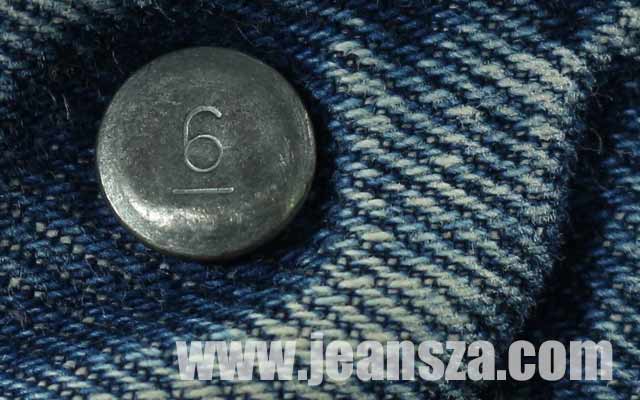
The number 6 button became a symbol of the El Paso factory's dominance. It was used continuously until the early 1980s, a period when Levi's began making major changes to its production. This change coincided with the introduction of new weaving techniques that brought "sandy" open-end denim to the forefront, as previously noted (the change from 8% to 10% shrinkage in July 1980).
The button stamping also changed, transitioning from single-digit to three-digit numbers. This was a gradual process across different factories, beginning in late 1980 and completed by mid-1981, after which no single-digit buttons remained.
The Evidence: Care Tags and Buttons are Key
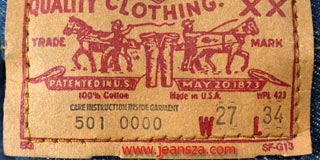
The discovery from examining the care tags of Levi's 501 jeans made in early 1981 provides the most precise answer regarding when the button number 6 became 524.
-
February 1981: Jeans produced this month still used the number 6 button, indicating that the El Paso factory was adhering to its long-standing production process.
-
March 1981: This is the most crucial month. It's the first instance of the number 524 button appearing, symbolizing the start of a new era for Levi's 501 production.
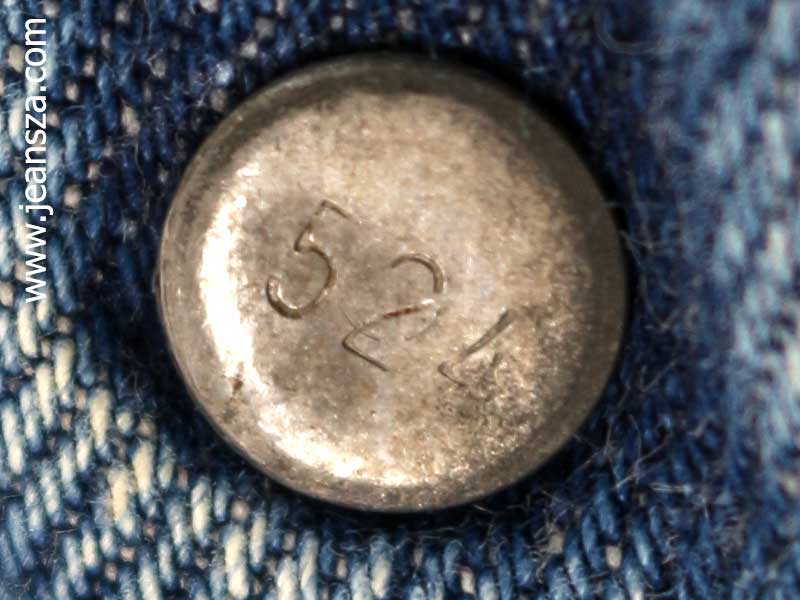
This finding aligns perfectly with previous research. The change in button numbers was another step in a series of modernizations to the production process. The shift from single-digit to three-digit numbers was not simultaneous across all factories but rather a staggered transition that took place from late 1980 to mid-1981.
Why the Change to a Three-Digit Number?
The move from a single-digit to a three-digit button number reflects the expansion of the Levi's company and an upgrade to its management system for increased efficiency. Using a three-digit number allowed for more detailed and systematic identification of factories and their specific production lines. This was crucial for a large-scale business during that era, as it allowed for greater speed and accuracy in manufacturing and distribution.
The Importance of This Discovery
The discovery of the exact timeline for the change from button number 6 to 524 is significant for vintage denim collectors for several reasons:
-
Accurate Dating: This information helps collectors more precisely date their Levi's 501 jeans.
-
Historical Value: Knowing which jeans represent this specific transition adds to their historical value.
-
Telling a Story: The shift from the number 6 button—a symbol of the golden age of denim in the late 20th century—to the number 524—representing the new era until the El Paso factory closed in 2002—is a fascinating story for anyone passionate about these jeans.
The change from button 6 to 524 in March 1981 is more than just a number change; it's a testament to a pivotal moment in the history of the Levi's 501, showcasing the brand's ability to adapt and seamlessly transition into a new era.