The Not-So-Secret Code on Your Levi's Jeans Button
Levi’s jeans are more than just denim; they are a global legacy with standards and uniqueness that have inspired countless other brands. For denim enthusiasts and collectors of second-hand jeans, one of the most intriguing details is the numerical code embossed on the back of the top button. What do these numbers actually signify?
Whether you own a vintage pair or a modern release, you will likely find these marks. Let’s dive deep into the world of Levi’s factory codes.
1. What is the Levi’s Button Code?
Many people mistakenly believe these codes are purely for anti-counterfeiting. While they do help verify authenticity, their primary purpose is Identification.
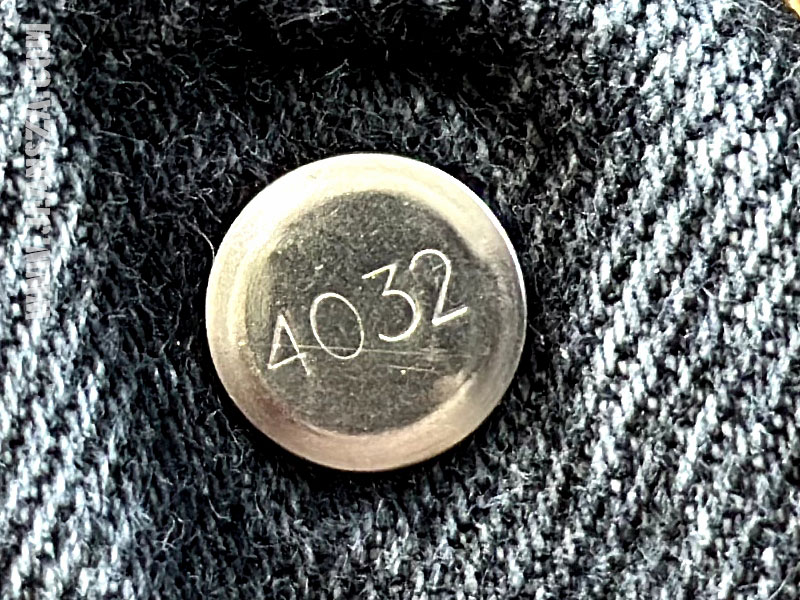
The numbers or letters stamped on the back of the top button are Factory Codes. They indicate which specific factory manufactured that pair of jeans. Levi’s uses these codes for quality control and traceability. If a defect is found in a particular batch, the company can trace it back to the exact production line and machinery.
Note: Not all Levi’s have stamps. Occasionally, a pair might skip this process due to a factory error, or they might be very old vintage pairs produced before the coding system was standardized.
2. How to Authenticate Your Jeans Using the Button Code
In the world of second-hand jeans, consistency is key. To verify if your Levi’s are authentic, you must perform a "Consistency Check":
The Care Tag Match
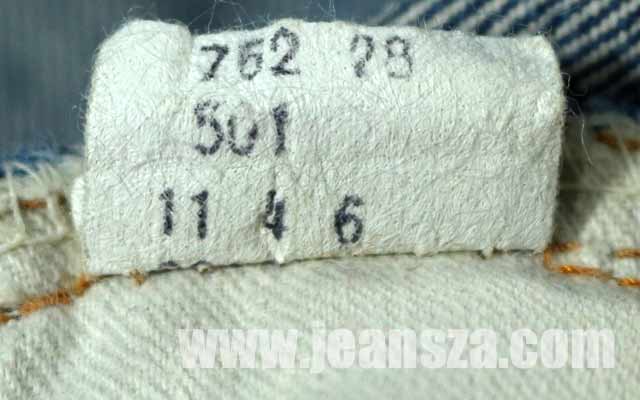
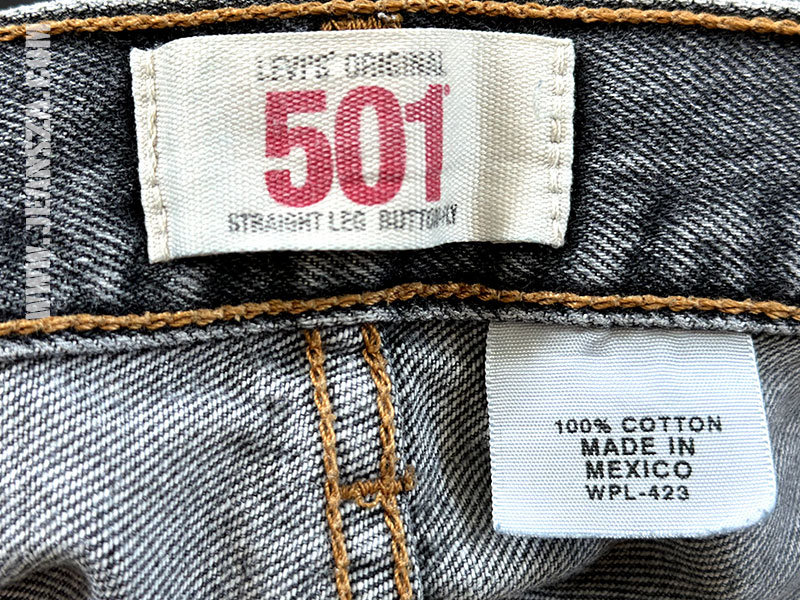
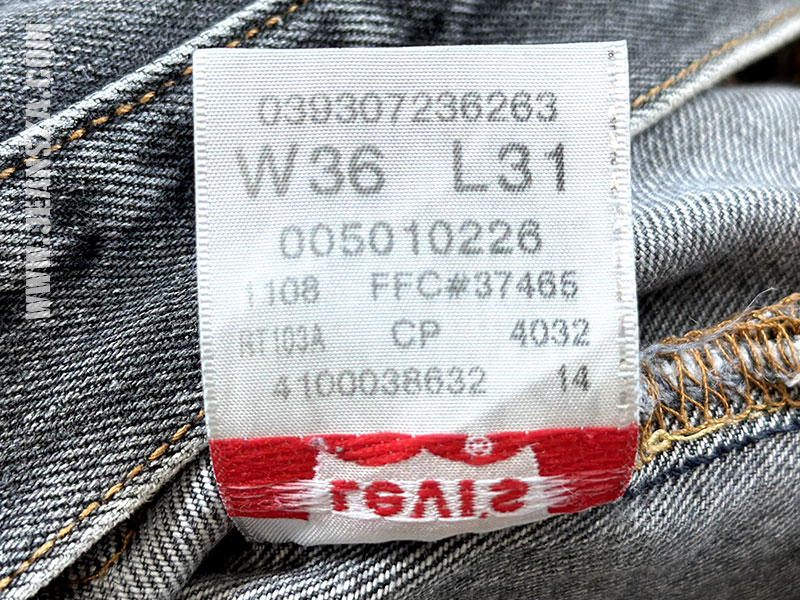
Most Levi’s produced from the 1980s onwards feature a Care Instruction Tag sewn into the inner seam or printed on the pocket bag. This tag contains various production details, including a factory code.
The Golden Rule: The factory code on the care tag must match the code stamped on the back of the top button.
-
If they match: It is highly likely the jeans are authentic.
-
If they don't match: This is a red flag. The button might have been replaced, or the jeans could be a low-quality counterfeit.
3. Evolution of the Codes: From Single Digits to 4-Digits
Understanding the era of your jeans can often be done by looking at the format of the stamp:
-
1950s - 1960s: Usually single letters (e.g., J, S, W) or single digits (e.g., 2, 5, 6).
-
1970s - 1980s: Transitioned to 2 or 3-digit numbers (e.g., 6, 524, 555).
-
1990s - Present: Most modern pairs use 3 or 4-digit codes (e.g., 524, 5096, 4001, 4994).
4. Global Levi’s Factory Code List (Curated Database)
Based on our experience handling hundreds of pairs at Jeansza.com, here is a compilation of factory codes categorized by country:
🇺🇸 Made in USA (The Collector's Holy Grail)
-
555: The legendary Valencia Street factory in San Francisco. Highly coveted by collectors.
-
524: El Paso, Texas (Commonly found in 90s "Grainy Texture" 501s).
-
552: San Angelo, Texas.
-
501 / 6 / 16: Often found in vintage 70s-80s pairs.
🇲🇽 Made in Mexico (Modern Quality)
-
4001, 4093, 4170, 4459, 4991: Known for excellent fading characteristics and durability.
🇯🇵 Made in Japan (Premium Craftsmanship)
-
J22, J09, J41: Famous for superior indigo dyeing and meticulous attention to detail.
🇹🇭 Made in Thailand
-
T15, 5166 : Quality exports often found in both the local and Japanese markets.
🇪🇺 Europe & Others
-
Made in Poland: 3061 (High-quality Premium lines).
-
Made in Turkey: 247, 3506 (Specialists in modern wash techniques).
-
Made in Pakistan: 8520, 5163 (Common in newer Levi's Premium lines).
-
Made in China: 4994, 4681 (Standard and Premium modern releases).
5. Why the "555" Code is So Valuable?
If you find the code 555 on your second-hand jeans, you’ve struck gold. This code represents the original Valencia Street factory. When Levi's began their LVC (Levi’s Vintage Clothing) line, many of the early, high-quality reissues were made here. The denim from this factory is renowned for its unique fading potential and rugged texture.
| No. | Made in | List of Levi's factory button stamping factory codes |
| 1 | USA |
A, D, E, J, K, L, O, R, S, W, 1, 2, 4, 5, B05, 6, 8, 8G, 9, 10, 14, 16, 17, 18, 19M, 20, 23, 52, 94, 231, 233M, 242, 298, 311, 337, 379, 501, 511, 512, 513, 515, 517, 520, 521, 522, 523, 524, 524M, 525, 526, 527, 529, 532, 541, 544, 546, 546M, 549, 552, 553, 554, 555, 558, 563, 571, 575, 581, 581M, 643, 653, 777, 4170, 4420 |
| 2 | Australia | 341 |
| 3 | Bangladesh | 3250, 3440, 3937, 4582 |
| 4 | Belgium | 266 |
| 5 | Brazil | 662 |
| 6 | Cambodia | 652, 689, 689M, 748 |
| 7 | Canada | 121, 212, 216, 217 |
| 8 | China | 3269, 3496 |
| 9 | Colombia | 652, 689, 689M, 748 |
| 10 | Dominican | 110, 333, 333M, 4323 |
| 11 | Egypt | 435, 889, 3757, 4649, 4985, 4757 |
| 12 | El Salvador | 134 |
| 13 | England | 211,299, 311 |
| 14 | France | 275 |
| 15 | Guatemala | 342, 977 |
| 16 | Haiti | 267, 267M, 4355, 4384 |
| 17 | Hungary | 252 |
| 18 | Hong Kong | H90 |
| 19 | Indonesia | 3245 |
| 20 | Italy | 101, 116, 1197, |
| 21 | Japan | J02, J22, J38, J39, 3012, 3015, 3029 |
| 22 | Korea | K37, K91 |
| 23 | Lesotho | 450, 499, 3405 |
| 24 | Malta | M41, M43 |
| 25 | Mexico | 104, 104M, 125, 159M, 178M, 230, 493, 647, 989, 4001, 4032, 4090, 4093, 4996 |
| 26 | Morocco | M74/528 |
| 27 | Nicaragua | 4460 |
| 28 | Pakistan | 092, P44, 0114, 4309, 4311, 8520 |
| 29 | Puerto Rico | 918 |
| 30 | Philippines | P85, 359, 666, 999, 1300, 3071, 3073, 3074 |
| 31 | Portugal | P30 |
| 32 | Poland | 273 |
| 33 | Spain | 292, 295 |
| 34 | Sri Lanka | 117, 906, 3449, 4403 |
| 35 | Thailand | T15, 5166 |
| 36 | Tunisia | T27, T31, T34, 063 |
| 37 | Turkey | T01, T99, 034, 247, 3813, 4006, 4016, 4649, 4896, 4983, 5504 |
| 38 | UK | 211, 299, 311, U10 |
| 39 | Vietnam | V23,V |
6. Expert Tips for Buying Second-Hand Jeans
Identifying the button code is just the first step. To ensure you're getting a top-tier pair, check these details:
-
Stitching: Authentic Levi’s feature clean, consistent stitching with no loose threads.
-
Red Tab: Look for clear lettering. If you find a Blank Tab (only the "R" symbol), don't worry—it’s a rare authentic variant!
-
The Patch: Whether leather or cardstock, the printing should be sharp, not blurry or "plastic" looking.
-
Fabric Weight: Genuine Levi's denim has a specific "hand-feel" and weight (Oz) that cheap replicas cannot mimic.
Conclusion
Learning about Levi’s factory codes makes collecting second-hand jeans an adventure. It allows you to trace the journey of your jeans across the globe and through time.
At Jeansza.com, we verify every pair—from the button stamp to the care tag—ensuring our customers receive only authentic pieces with a story to tell.